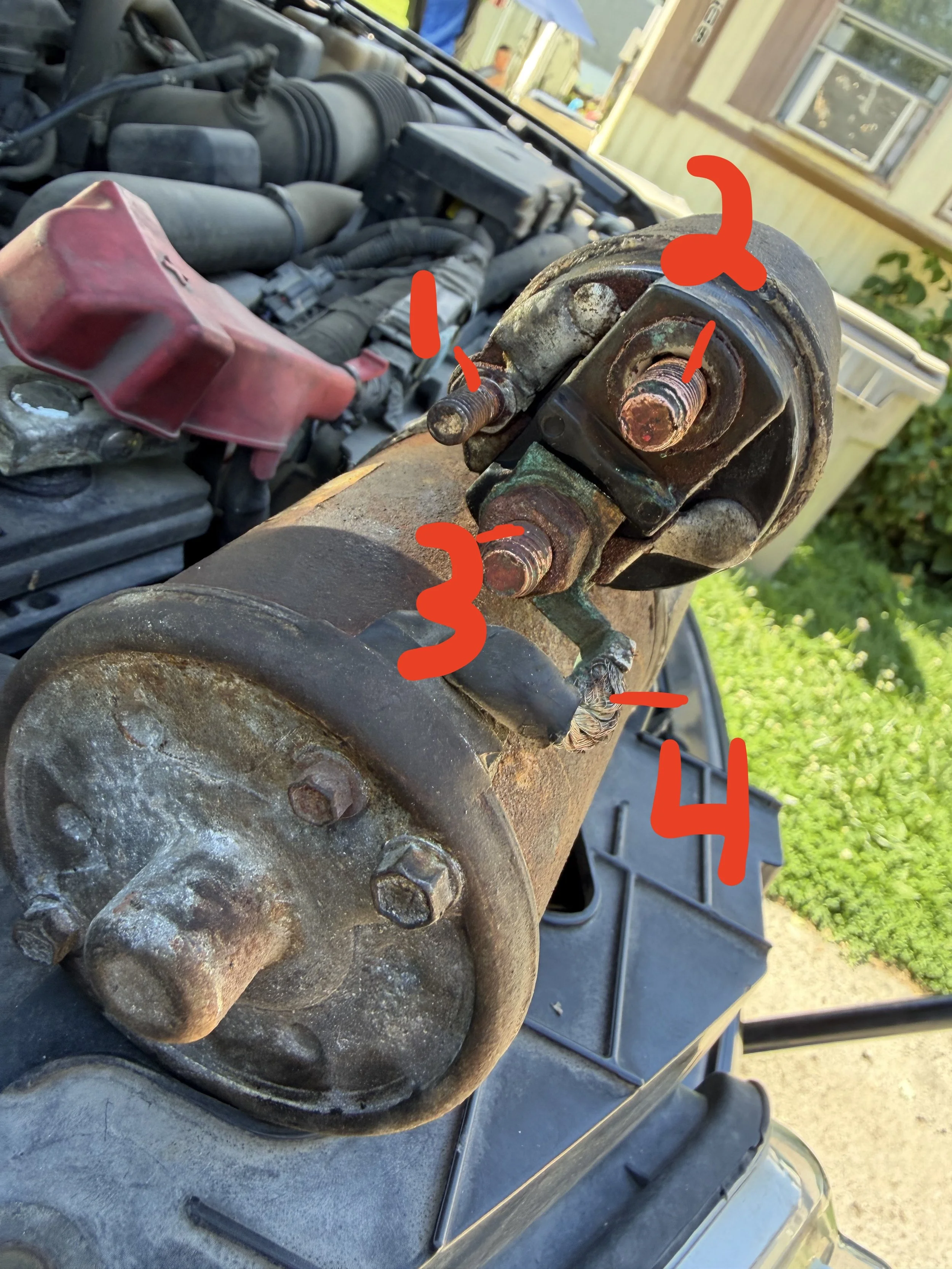
Starters are easy to test and can often cause no starts. There are a few important points to note. Firstly, you are playing with electricity. If you do this wrong you can cause sparks or more damage to your car. If you are not confident in what you are doing, do not do it. The starter is broke down into the motor and solenoid. The motor spins and the solenoid sends the power to your starter to spin. This is best tested with a test light although a multimeter works just fine. These tests can all pass and it still be a wiring issue. be sure to load test your wiring as well unless you are given an obvious other cause.
Step one is do you have power at the starter. This is point 2 on the image. There should be constant power at this point. whatever you battery reads should read the same here. if the battery is at 12v and this point is at 8v it indicates a wiring issue on this circuit. 12v at the battery and 11.8 at this point is not a concern.
Step two is are you getting power on you signal wire. This is point 1 on the image. this is sometimes a connector versus a bolt. if its a connector you can backprobe it if you know enough to safely do so. Otherwise, keep is simple and disconnect the connector and test the side that touches the starter. be careful when doing this. DO NOT SPREAD THE CONNECTOR where the contact us made. Gently touch the connector and get your reading. This wire is only hot when the engine is cranking so you may need a partner or set up a one man system. The goal of this step is to test the wiring. If you disconnect the wire and then test the component it will not read any voltage even if the wiring is good.
Step three assuming the you have power at the starter on both the constant power and signal wire, make the starter turn on yourself. This can be referred to as jumping the starter. These are only a couple ways to do it but these variations will be a huge indicator if you starter is good. The solenoid is basically a big relay. When power goes in the signal bolt, power moved from the constant power bolt over to the starter. If you put a screwdriver from the constant power (2) to the motor lead fastener (3) it should turn the starter on. Sometimes this isn’t possible or test one isn’t enough to be satisfied. In that case put power to the signal bolt (1). You can do this by running a wire from the battery or even jumping from the constant power (2). I prefer method 2 because its typically easier and has less sparks. The entire load of starter from method 1 can sometimes spark and melt a pocket screwdriver. Take a quick peek at point 4 on the image while you’re at the starter. This is the starter motor lead and commonly corrodes and will snap, especially on chevy vehicles. If you trigger your starter and it still wont turn over you need to remove the starter and test bench test it but it’s more than likely bad.